
Introduction: A year of adaptation and progress
2026 has been a year of continued adaptation and progress for the aviation industry. Airlines, maintenance organisations and engineering teams have been finding new ways to manage fleet requirements, maintenance capacity and operational resources. Digital technologies are creating new opportunities to improve maintenance planning, identify technical issues earlier and make better use of engineering expertise. At the same time, developments in aircraft availability, maintenance costs, workforce requirements and regulation are influencing how aviation organisations prepare for the future.
Across the industry, predictive maintenance is moving closer to practical application, electronic maintenance workflows are becoming more established, and advanced analytics and artificial intelligence are expanding the possibilities for operational decision-making. These developments are taking place alongside continued supply chain constraints and changing fleet strategies, highlighting the importance of coordination between engineering, maintenance planning, procurement and operations.
In June 2026, the International Air Transport Association (IATA) outlined four priorities for strengthening aviation's supply chain: improving visibility, opening up the aftermarket, unlocking the value of digital technologies and building human capacity. Although focused on supply chain challenges, these priorities reflect a wider shift in the industry. Improving operational performance increasingly depends on how effectively organisations coordinate aircraft, maintenance resources, people and information, rather than simply introducing new technology.
Looking back at the major developments of 2026, six lessons stand out. Together, they provide a perspective on the operational changes shaping aviation and what airlines, continuing airworthiness management organisations (CAMOs) and maintenance, repair and overhaul (MRO) providers should consider as they prepare for 2027 and beyond.
1. Fleet planning is becoming a more dynamic exercise
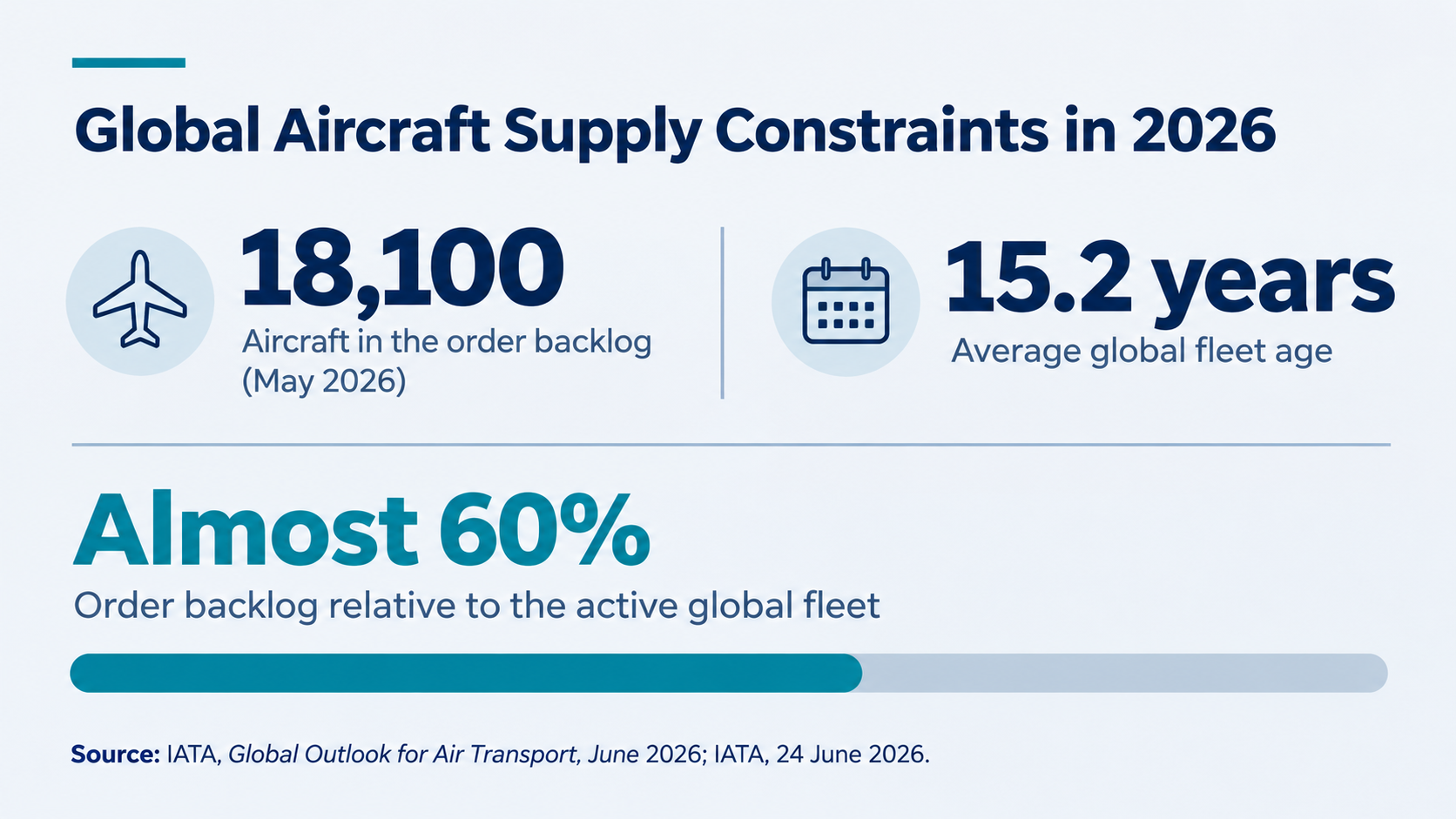
In June 2026, IATA reported that the global aircraft order backlog had exceeded 18,000 aircraft, while average fleet age had reached a record 15.2 years. These figures illustrate how the continued imbalance between aircraft demand and delivery capacity is influencing airline fleet strategies. Operators have been adapting by extending the operational lives of existing aircraft, adjusting replacement schedules and reconsidering leasing arrangements. IATA's June 2026 Global Outlook for Air Transport also identified aircraft availability as a significant constraint on airline growth and financial performance.
While extending aircraft operations can help airlines maintain capacity, it also has implications for maintenance planning, continuing airworthiness and lifecycle management. Aircraft that remain in service longer than originally anticipated may require revised maintenance forecasts, closer attention to component performance and continued assessment of maintenance programme requirements. Extended utilisation can also affect the timing of major maintenance events, modifications and component replacements, making it important for engineering and planning teams to regularly reassess the assumptions behind their fleet maintenance strategies.
For CAMOs, these developments have particular significance. Continuing airworthiness responsibilities remain throughout an aircraft's operational life, regardless of changes to its planned retirement or lease arrangements. As aircraft accumulate additional maintenance activity, maintaining oversight of Airworthiness Directive compliance, aircraft configuration, modifications, component histories and technical records becomes increasingly important. Any decision to extend an aircraft's service life must therefore be supported by maintenance and continuing airworthiness planning that reflects its actual condition, utilisation and applicable requirements.
Aircraft transitions introduce another consideration. An aircraft originally scheduled for redelivery may remain with an operator for several additional years, accumulating further maintenance events and technical documentation. When it eventually transfers to another operator, those records must accurately reflect its extended operational history. The receiving organisation then needs to establish confidence in incoming aircraft records before integrating the information into its maintenance and engineering environment. This process involves reviewing aircraft utilisation, maintenance accomplishment status, component histories, configuration information and applicable airworthiness requirements.
Looking towards 2027, operators should reassess whether their fleet planning assumptions remain aligned with maintenance forecasts and continuing airworthiness requirements. For aircraft expected to remain in service longer, this means reviewing the implications for maintenance scheduling, component requirements and technical records management. For organisations anticipating aircraft induction or redelivery, preparing and validating records early can help identify discrepancies before they create additional work or uncertainty during the transition.
The broader lesson from 2026 is that flexible fleet strategies require equally adaptable maintenance planning and continuing airworthiness oversight. As aircraft lifecycles become less predictable, maintaining a clear understanding of each aircraft's technical position becomes increasingly valuable.
2. Engine and component availability is reshaping maintenance planning
Engine maintenance remained a major industry concern throughout 2026. On 24 June, IATA and Emerton published a study examining MRO bottlenecks affecting latest-generation single-aisle engines, particularly the CFM LEAP and Pratt & Whitney Geared Turbofan families. The study identified engine durability challenges, limited spare-engine availability, parts shortages and restricted maintenance capacity as factors disrupting airline operations. To illustrate the scale of these pressures, IATA reported that Pratt & Whitney GTF-related groundings had reached 648 aircraft in March 2025, representing 28% of the affected fleet at that time.
The challenges extend beyond engines. At MRO Europe in October 2026, industry participants reported that some component repair turnaround times had increased from approximately 30–40 days to 60–70 days compared with pre-pandemic conditions. Longer repair cycles and limited component availability are influencing how airlines approach inventory management, supplier relationships and maintenance planning, with consequences that extend across multiple operational departments.
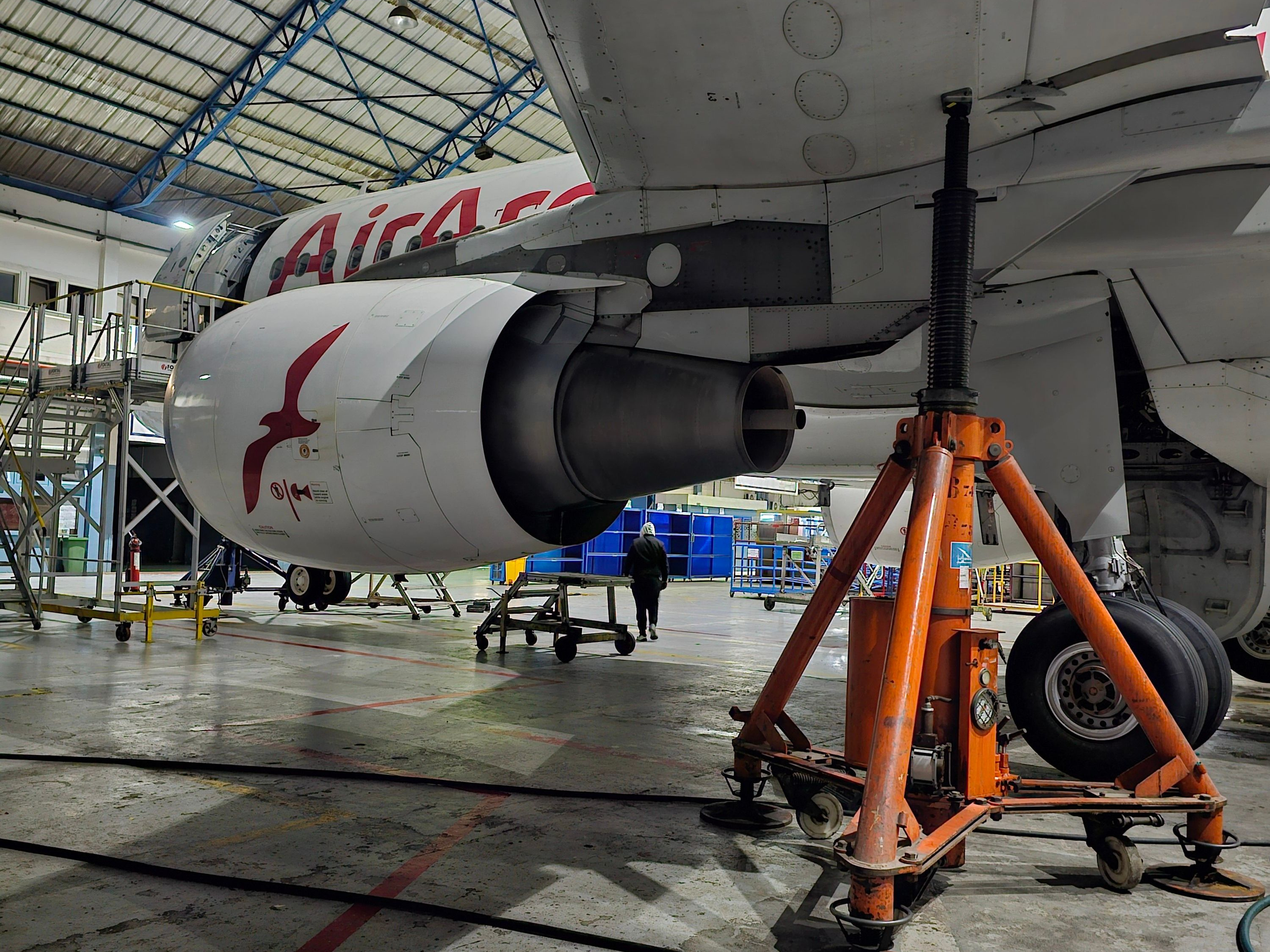
Consider a component scheduled for removal during planned maintenance. If a replacement is unavailable when required, the maintenance planning team may need to reconsider the work schedule, while procurement investigates alternative suppliers or repair capacity. Materials teams may have to arrange component transfers between locations, and logistics teams must coordinate delivery. If the component cannot be secured in time, the delay may ultimately affect aircraft availability. What initially appears to be a supply chain issue can therefore become a wider coordination challenge involving engineering, maintenance planning, procurement, logistics and flight operations.
Longer repair cycles can also increase inventory requirements, as airlines may need to hold additional spare components to maintain operational resilience, tying up working capital in the process. For CAMOs, these constraints introduce further planning considerations, particularly when required inspections, modifications or component replacements depend on limited parts availability or maintenance capacity. Applicable airworthiness and maintenance requirements still need to be met, making earlier coordination between continuing airworthiness, maintenance planning and material management especially important.
These developments suggest that operators should look beyond simply increasing spare-parts inventories. A more sustainable approach involves reviewing how effectively maintenance forecasts, procurement processes and material planning are connected. Are upcoming component requirements visible to procurement teams sufficiently early? Are supplier turnaround-time assumptions regularly updated using actual performance? Can engineering and materials teams identify critical shortages before a maintenance event is affected? Answering these questions can help organisations recognise potential constraints while there is still time to evaluate alternatives.
As airlines prepare for 2027, closer coordination between maintenance planning and supply chain management will be increasingly important. Rather than treating component availability as a problem to resolve when a maintenance event approaches, organisations should consider how longer-term forecasting, supplier performance information and earlier communication between departments can support more resilient maintenance operations.

3. Predictability is becoming as important as maintenance cost
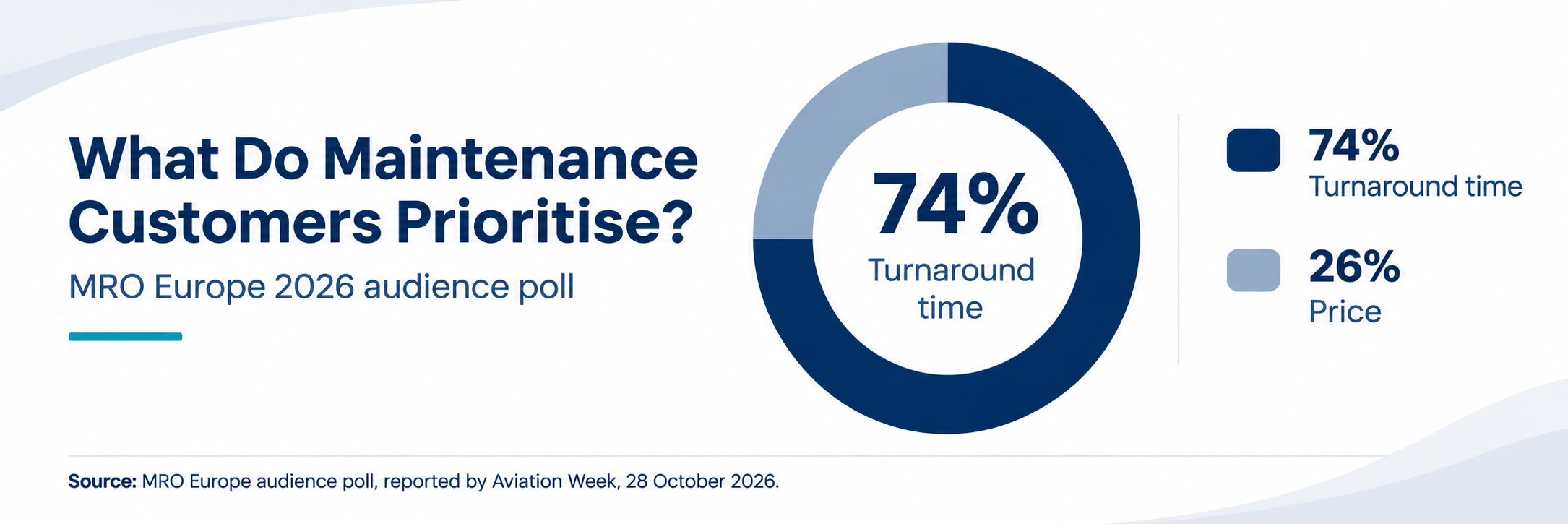
Another significant discussion at MRO Europe 2026 concerned the value of predictable maintenance delivery. During a panel discussion reported by Aviation Week on 28 October, an audience poll found that 74% of participating respondents prioritised turnaround time over price, while 26% selected price. Although this result reflects the views of a conference audience rather than a representative industry-wide survey, it provides an interesting indication of how maintenance customers are evaluating supplier performance in an environment where capacity and delivery schedules remain uncertain.
Traditionally, maintenance procurement decisions have involved balancing cost, quality, turnaround time and capacity. However, when replacement aircraft, engines and components are difficult to secure, unexpected maintenance delays can have consequences that extend far beyond the original repair price. The lowest quoted maintenance cost may not necessarily produce the lowest overall operational cost, particularly when uncertain delivery dates affect aircraft availability.
Consider two repair providers offering the same service. One offers a lower price but cannot provide a dependable completion date, while another charges more but offers a more predictable turnaround and clearer communication about potential delays. The first option may appear more attractive when assessed solely on repair cost. However, if the component is required to return an aircraft to service, a delayed delivery could generate additional expenses through aircraft downtime, alternative component sourcing, additional logistics arrangements or changes to operational schedules. The same principle applies to scheduled base maintenance, where unexpected extensions can disrupt aircraft allocation, subsequent maintenance slots and resource planning.
For MRO providers, this environment increases the importance of realistic commitments, transparent progress reporting and early communication when schedules become uncertain. For airline customers, it highlights the value of evaluating suppliers through a broader operational perspective. Price remains important, but the reliability of delivery commitments, actual turnaround performance and the consequences of delays deserve greater attention.
In 2027, airlines and MROs should consider whether their existing performance indicators adequately reflect these broader consequences. This may involve comparing actual turnaround times with contracted commitments, reviewing how supplier capacity is evaluated and incorporating the operational cost of delays into procurement decisions. Establishing clearer escalation processes and improving communication between maintenance providers, procurement and operational planning teams can also support more effective responses when schedules change.
The lesson is not that maintenance cost has become less important. Rather, 2026 has reinforced that predictable maintenance outcomes are a significant component of overall operational efficiency, particularly when aircraft and maintenance resources are already constrained.
Subscribe to the newsletter
Practical guidance on aviation data management, delivered straight to your inbox.
4. Workforce strategy is increasingly about developing and protecting expertise
Workforce development remained an important aviation maintenance topic in 2026, with encouraging signs of progress alongside continuing long-term challenges. In September, Aviation Week reported findings from an Aviation Technician Education Council and Oliver Wyman workforce study showing that 11,103 new FAA Airframe and Powerplant mechanic certificates had been issued in the United States during 2025, representing a 23% increase over the previous year. These figures suggest that initiatives to attract and train new aviation maintenance professionals are producing measurable results, even as the industry continues to prepare for future workforce requirements.
Recruitment and certification, however, represent only part of the challenge. Maintenance organisations must also develop practical experience, retain specialised knowledge and ensure that qualified personnel are available where they are needed. Experienced aviation professionals contribute more than their working hours: they bring familiarity with aircraft systems, maintenance procedures, troubleshooting methods, operational histories and regulatory requirements. Developing this expertise takes time, and organisations must balance the arrival of new personnel with sufficient training capacity, supervision and opportunities for practical experience.

For airline engineering and CAMO teams, the challenge also involves maintaining continuity of technical knowledge. Engineering decisions frequently depend on an understanding of previous maintenance actions, aircraft configuration, operational context and applicable airworthiness requirements. When this knowledge is concentrated among a small number of experienced individuals, organisations may become increasingly dependent on their availability. Clear documentation, consistent processes and structured knowledge transfer can help ensure that expertise remains accessible as teams evolve.
Workforce pressures also create an opportunity to examine how qualified personnel spend their time. Some activities require substantial engineering judgement, while others involve repeated preparation, information gathering, report compilation or administrative checks. Although these tasks may be necessary, they do not always need to be performed manually in the same way every time. Better information access, standardised processes and appropriate automation can help reduce unnecessary repetition while preserving technical oversight and accountability.
As organisations prepare for 2027, workforce strategies should therefore extend beyond recruitment targets. MRO providers should assess whether training and mentoring capacity can support future workforce growth, while airlines and CAMOs should consider how technical knowledge is documented and transferred. Reviewing repetitive administrative work can also reveal opportunities to improve engineering productivity without compromising professional judgement.
The broader lesson is that a sustainable aviation workforce depends not only on developing new talent, but also on protecting existing expertise and creating working environments where that expertise can be applied effectively.
5. Digital transformation is moving towards operational outcomes
Digital transformation continued to advance across aviation maintenance and engineering in 2026, with airlines increasingly adopting electronic maintenance workflows, advanced analytics and predictive maintenance capabilities. Artificial intelligence is also changing how organisations explore data, develop software and automate information-related activities. What makes these developments particularly significant is the increasing focus on practical operational outcomes: the conversation is moving beyond what a technology can do towards how it changes maintenance planning, engineering investigations and daily operational decisions.
A 2026 Aircraft IT case study from KLM Cityhopper offers a practical example of how predictive maintenance can support more proactive engineering decisions. With much of its fleet operating away from its main maintenance base, the airline places particular importance on identifying developing technical issues early enough to arrange maintenance before they cause operational disruption. According to the case study, fewer than 15% of its aircraft remain at the main base overnight, while approximately two-thirds of its outstations do not have Embraer maintenance support. This makes advance planning particularly valuable when technical issues arise.
Rather than treating predictive maintenance as a standalone technology initiative, KLM Cityhopper has focused on connecting early technical indications with engineering review and planned maintenance actions. The airline reported initiating approximately 380 predictive maintenance work orders in 2025, with 76% assessed as effective under its internal criteria. One example involved identifying a developing hydraulic leakage pattern and arranging a component replacement during planned maintenance, avoiding unscheduled ground time, delays and cancellations in that instance. Further examination of the removed component revealed internal damage, and the findings were shared with the manufacturer.
What makes this case particularly relevant is the approach behind it. Predictive information is used to support engineering judgement, maintenance planning and collaboration across operational teams, rather than being treated as an end result in itself. The focus is not simply on detecting potential faults, but on ensuring that the organisation has the time, expertise and processes needed to respond effectively. This illustrates an important lesson for aviation organisations considering advanced analytics or AI: the value of a predictive capability ultimately depends on whether it leads to informed and timely operational action.

The same principle applies more broadly to digital transformation. A dashboard may make operational trends easier to visualise, but it does not automatically explain their causes. An automated report may reduce preparation time, but its usefulness depends on whether engineers can rely on the underlying information and use the results to guide further investigation. Digital tools create the greatest value when they support a complete operational process, from identifying an issue to understanding its implications and deciding what action is appropriate.
Artificial intelligence adds another dimension to this discussion. Modern AI-assisted development tools are making it easier for organisations to create analytical applications, dashboards and automated workflows, potentially allowing engineering teams to explore operational questions more independently. However, developing a tool and maintaining a dependable operational process are different challenges. Organisations still need to consider how information is validated, how analytical logic is maintained, how results are reviewed and whether the solution can remain reliable as systems, fleets and operational requirements evolve.
Some airlines may have the resources and expertise to develop sophisticated analytical capabilities internally, while others may benefit from specialist aviation applications. The relevant decision is not simply whether a tool can be built, but whether the resulting capability can consistently support operational requirements over time.
Looking towards 2027, organisations should evaluate digital investments through the improvements they are expected to create. Before expanding an analytics, predictive maintenance or AI initiative, it is worth establishing which maintenance or engineering decision should improve, what information is required, how users will act on the findings and how effectiveness will be measured. KLM Cityhopper's experience also highlights the importance of prioritising predictive use cases according to operational impact and the organisation's ability to act on the results, rather than pursuing every technically interesting possibility.
The central lesson from 2026 is that the next stage of aviation digitalisation will increasingly be defined by measurable operational outcomes. More advanced technology creates new possibilities, but its lasting value depends on how effectively it supports engineering expertise, maintenance planning and practical decision-making.

6. Regulatory and information responsibilities continue to evolve
Information security and regulatory oversight became more prominent topics for European aviation organisations in 2026. One significant milestone was the applicability of Commission Implementing Regulation (EU) 2023/203 from 22 February 2026, introducing information security requirements for organisations within its scope, including relevant aviation operators, Part-145 maintenance organisations and CAMOs. The regulation forms part of EASA's wider Part-IS framework, which includes provisions with different applicability dates and is intended to address information security risks with potential consequences for aviation safety.
As aviation organisations become increasingly dependent on connected operational systems, these requirements highlight the importance of understanding how information is accessed, exchanged, controlled and protected. Maintenance and engineering information may be distributed across M&E platforms, document repositories, OEM systems and external service-provider environments. As more organisations and systems become involved in operational processes, responsibilities for information security management and supplier oversight require clearer definition.
For organisations within the scope of Part-IS, this includes assessing relevant information security risks and establishing the management arrangements required by the applicable regulations. However, information security should not be confused with technical records accuracy or continuing airworthiness compliance. These responsibilities may interact in daily operations, but they address different requirements and must be managed accordingly.
For CAMOs, the wider operational context is particularly relevant. Continuing airworthiness oversight depends on the availability, completeness and traceability of information concerning aircraft configuration, maintenance accomplishment status, applicable Airworthiness Directives, modifications and supporting technical records. As aircraft remain in service longer and operational information moves between more systems and service providers, maintaining this oversight can require increasingly careful coordination.
Aircraft transitions and outsourced maintenance activities illustrate the challenge. An airline may rely on several organisations to create, update or maintain technical information, but responsibilities for ensuring the necessary records remain available and suitable for continuing airworthiness oversight must remain clear. Similarly, MRO providers need to maintain appropriate control over maintenance documentation, work instructions and information exchanged with customers.
The developments of 2026 therefore provide an opportunity for organisations to review their information responsibilities more broadly. Those affected by Part-IS should assess their obligations against the applicable provisions and confirm that information security processes reflect their actual operational environments. CAMOs should also consider whether existing technical records procedures, documentation controls and external information exchanges support effective continuing airworthiness oversight.
In practical terms, this means reviewing how responsibilities are assigned when operational information is managed by external providers, whether critical maintenance and airworthiness records can be traced to supporting evidence, and how information handovers are controlled during aircraft transitions or system changes. These assessments should distinguish clearly between information security obligations and the separate requirements governing maintenance records and continuing airworthiness.
The lesson for 2027 is that greater digital connectivity must be accompanied by equally clear responsibilities for information management, traceability and regulatory accountability. As aviation operations become more interconnected, organisations need confidence not only in the systems they use, but also in the processes and responsibilities surrounding them.
Looking ahead: What the lessons of 2026 mean for 2027
The developments of 2026 reveal several connected changes in aviation maintenance and engineering. Fleet strategies are becoming more flexible as aircraft availability remains constrained, while engine and component shortages are encouraging closer coordination between maintenance planning, procurement and supply chain teams. Maintenance customers are placing greater importance on predictable turnaround times and the wider operational cost of delays. Workforce development initiatives are showing progress, although organisations must continue investing in practical expertise and technical knowledge transfer. At the same time, digital technologies are creating new opportunities for earlier maintenance intervention, while regulatory developments are reinforcing the importance of well-defined information responsibilities.
These trends do not point towards a single solution, nor will every organisation face the same priorities. Airlines operating ageing fleets may need to focus on maintenance forecasts, continuing airworthiness requirements and aircraft lifecycle planning. Operators affected by engine or component shortages may benefit from closer integration between maintenance requirements and material availability. MRO providers may concentrate on improving turnaround predictability, workforce development and capacity planning, while reliability teams explore how analytical insights can support earlier engineering action.
What connects these priorities is the growing importance of coordination. Decisions about fleet operations, maintenance resources, supply chain availability and engineering activities increasingly influence one another. Organisations that understand these relationships and maintain effective communication across departments will be better positioned to respond when circumstances change.
Rather than treating every industry development as a reason to introduce another system or process, the opportunity for 2027 is to identify where existing operational activities can become more connected, predictable and effective. This may involve improving how maintenance requirements are forecast, reviewing supplier performance, strengthening knowledge transfer, preparing aircraft records earlier or ensuring that digital initiatives lead to measurable operational improvements.
The EXSYN perspective: Supporting confidence across the aircraft lifecycle
At EXSYN, many of these industry developments reflect challenges we encounter when working with airline maintenance and engineering organisations. Whether an operator is preparing an aircraft for induction, investigating recurring technical issues, managing continuing airworthiness or improving operational reporting, effective decisions depend on information that teams can understand and trust.
We describe the discipline of maintaining trusted, connected, and predicted aircraft information across systems and throughout the aircraft lifecycle as Aviation Data Continuity. Through modular aviation applications, EXSYN supports specific operational needs, including aircraft transitions, continuing airworthiness, maintenance data validation, reliability intelligence and earlier risk detection. Our objective is to help organisations strengthen operational confidence while enabling engineering teams to spend more time applying their expertise to decisions that improve reliability, productivity and operational performance.
Conclusion: Turning industry progress into operational improvement
2026 has demonstrated the aviation industry's ability to adapt to a changing operational environment. Airlines have continued adjusting fleet strategies to maintain capacity, maintenance organisations are reconsidering how they manage turnaround commitments and supplier relationships, and workforce development initiatives are showing measurable progress. Meanwhile, advances in digital technology are creating new opportunities to improve maintenance planning, engineering productivity and operational decision-making.
The lessons extend beyond any single technology or operational discipline. For 2027, the opportunity lies in bringing these developments together through more adaptable fleet planning, closer supply chain coordination, predictable maintenance delivery, stronger workforce capabilities and digital transformation focused on practical results. For airlines and CAMOs, maintaining effective continuing airworthiness oversight throughout changing aircraft lifecycles will remain an essential part of that progress.
The organisations best positioned to benefit will be those that translate industry lessons into measurable improvements in how they plan, maintain and operate their aircraft.
The next step for aviation is not simply to become more digital but to become more coordinated, more proactive and better prepared to act.

Frequently Asked Questions
-
Key trends include ageing aircraft fleets, engine and component supply constraints, MRO turnaround predictability, workforce development, operationally focused digital transformation and evolving information security requirements.
-
Extended aircraft service lives require operators to reassess maintenance forecasts, component performance and maintenance programme requirements. CAMOs must also maintain oversight of aircraft configuration, AD compliance and technical records.
-
Engine maintenance capacity, spare-parts availability, extended repair turnaround times and workforce constraints remain significant concerns. These pressures increase the importance of maintenance forecasting, resource planning and supplier coordination.
-
CAMO teams should review maintenance forecasts against changing fleet plans, maintain reliable technical records, strengthen aircraft transition readiness and establish clear responsibilities for information exchanged with external organisations.
-
Unpredictable maintenance turnaround times can affect aircraft availability, maintenance schedules and operating costs. Airlines are therefore placing greater emphasis on dependable delivery commitments alongside maintenance pricing.
-
Predictive maintenance can help engineering teams identify developing technical issues early enough to investigate them and arrange maintenance before operational disruption occurs. Its effectiveness depends on reliable data, engineering expertise and maintenance planning.
-
Part-IS requires organisations within its scope to manage information security risks that could affect aviation safety. Commission Implementing Regulation (EU) 2023/203 became applicable on 22 February 2026.