
Less time preparing reports. More time understanding why.
EXSYN apps calculate the reliability indicators your programme runs on, the same way every month, from the data you already have.
Where most conversations start
We need faster, more reliable engineering reporting and insight.
The reliability data is there. The analysis still comes last.
When preparation takes days, trends are seen later and less time is left for investigation. The reliability review meets on numbers that are already a month old.
When preparation takes most of the cycle, the review meets on numbers that are already a month old.
Where reliability time goes
Tap the ones that apply to your team. Most operators recognise more than one.
Less report preparation. Alerts you can act on.
Less report preparation
Indicators are calculated from the same data every month, not assembled by hand.
Alerts you can act on
Control limits per ATA chapter show what is rising before it becomes a pattern of delays.
Repetitive defects found earlier
Rates and trends per aircraft and ATA chapter surface them in the monthly cycle.
Evidence for programme changes
Findings ratios per task support escalation and de-escalation proposals.
The apps don't make reliability decisions or approve programme changes. They give your engineers a consistent, traceable basis for them.
One package for your reliability programme.
Reliability reporting and reliability analysis, running on one data foundation. Your M&E system remains the system of record.
Produce the monthly reliability report without the manual build.
Configure your own monthly technical fleet reliability report, with the indicators and structure your programme requires, and export it as PDF. The same calculations run every month, so reports stay comparable over time and traceable to the underlying data.
Result: A consistent monthly report, with preparation time returned to analysis.
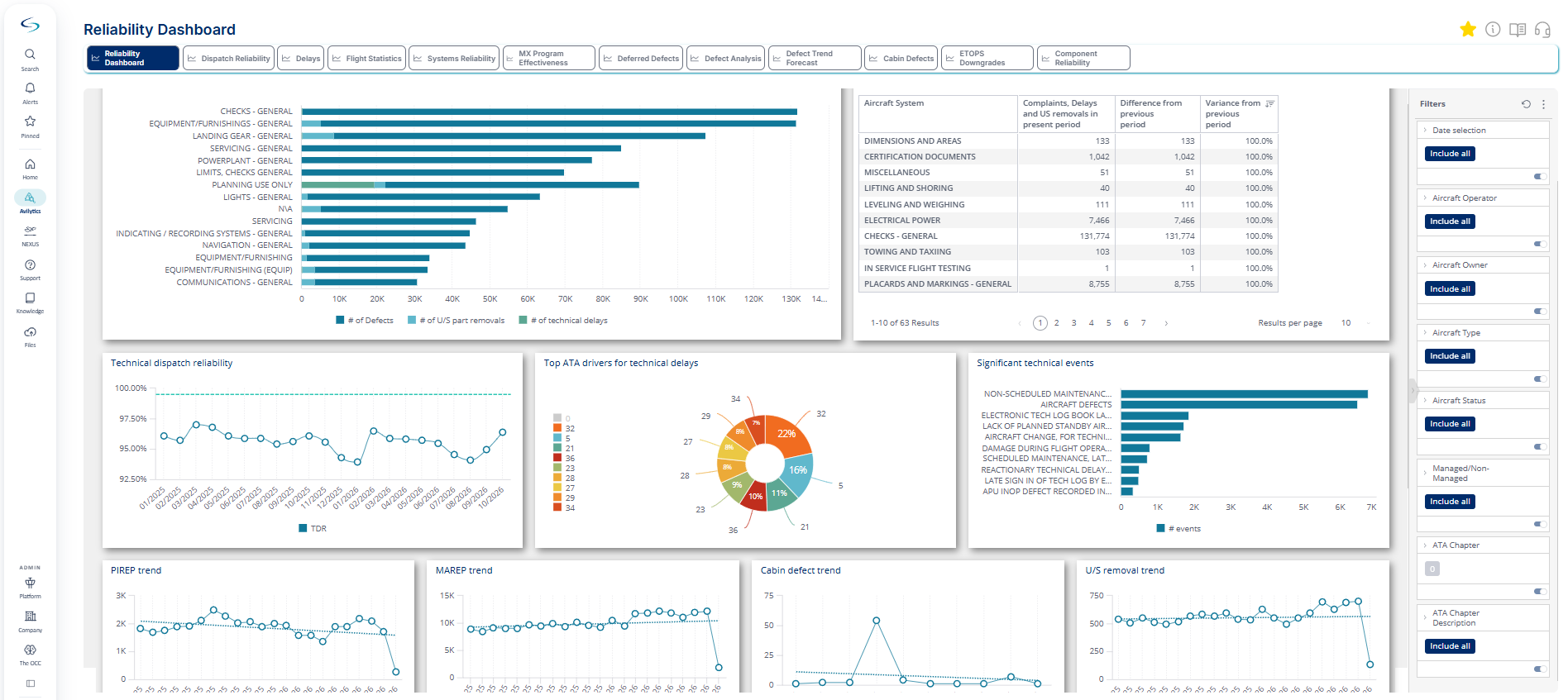
Understand what drives reliability, per ATA chapter, aircraft and component.
The full reliability management suite: main reliability dashboard, technical dispatch reliability, delays and cancellations, systems reliability, defect analysis with control limits, defect trend forecasting, deferred defects, ETOPS downgrades, component reliability and maintenance programme effectiveness.
Result: Engineering attention goes to the systems, aircraft and components that need it.
Reliable indicators need reliable data.
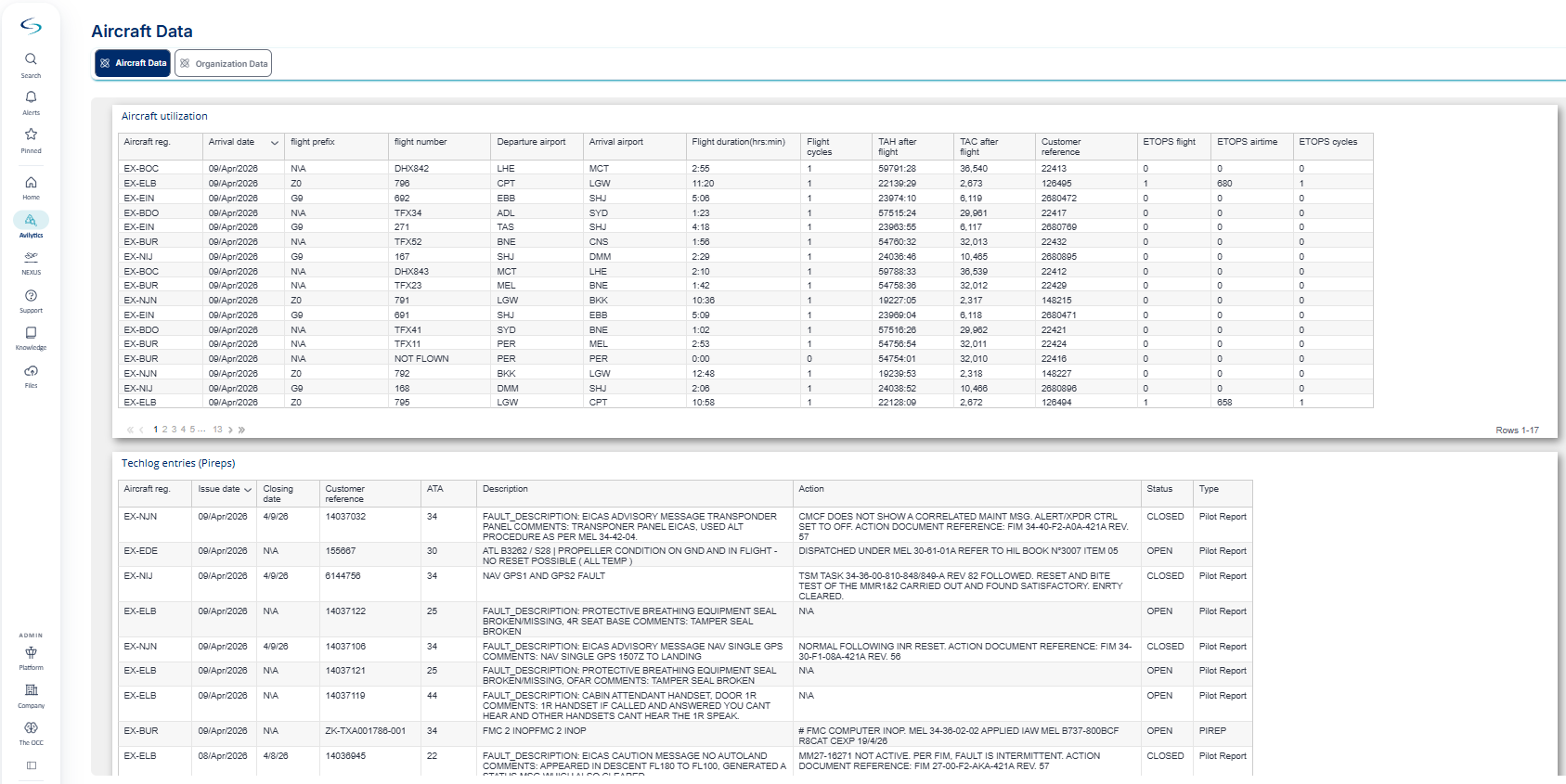
Utilisation checks verify flight records before they feed the indicators: station and TAC/TAH sequences, zero-duration flights, suspicious cycles, minutes and flight durations. Results come as exception reports, checks run on schedule, and the underlying records stay accessible for drill-down.
Result: Indicators your team and the authority can rely on.
One starting point for every review: the main reliability dashboard shows which ATA chapters drive defects, delays and removals, and what has changed since last month.
Preparing your next reliability review?
Let's look at your reliability data together, and where the monthly preparation time goes.